
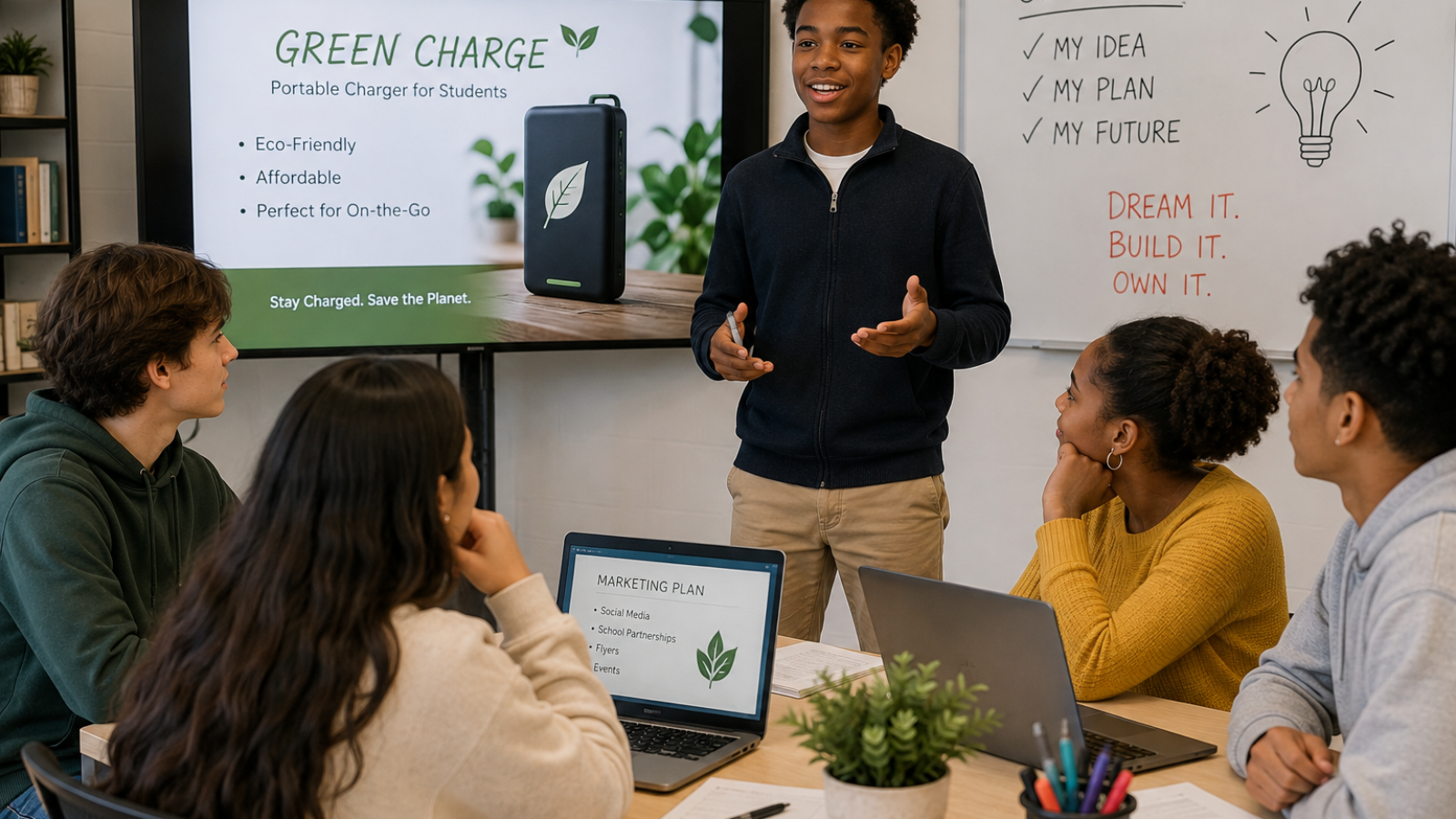
Confidence can change the direction of a young person’s life.
A confident young person is more likely to speak up, try something new, ask questions, share ideas, pursue opportunities, and recover when something doesn’t go as planned.
But confidence isn’t always something young people simply have. Often, it develops through experience.
That’s one of the reasons entrepreneurship education can be so powerful.
When young people are given an opportunity to create something of their own, make decisions, solve problems, work through challenges, and present their ideas, they begin discovering what they’re capable of accomplishing.
At Strahan Venture Academy, we believe entrepreneurship education isn’t only about teaching young people how businesses work. It’s also about helping them develop the confidence to believe their ideas have value.
Confidence Grows When Young People Have Ownership
In many traditional learning environments, students are told what assignment to complete, what subject to study, and what the correct answer should be.
Entrepreneurship is different.
Students have choices.
They can decide what type of business interests them. They can choose a business name, develop a brand, identify potential customers, think about pricing, create marketing ideas, and decide how they want to present their businesses.
Those decisions create a sense of ownership.
Instead of working on someone else’s idea, students begin saying:
“This is my idea.”
“This is my business.”
“This is something I created.”
That sense of ownership can be an important confidence builder.
Young People Discover That Their Ideas Matter
Sometimes young people hesitate to share their ideas because they’re worried about being wrong, being judged, or not being taken seriously.
Entrepreneurship gives them a different perspective.
An idea doesn’t have to be perfect to be worth exploring.
Students learn to ask questions such as:
What problem could I solve?
What could I create?
Who would need this?
How could I make my idea better?
As they develop answers, they begin seeing themselves as creators and problem-solvers rather than simply students completing an assignment.
A young person who realizes, “I came up with this idea myself,” begins developing confidence in their own thinking.
Small Accomplishments Create Bigger Confidence
Confidence rarely appears overnight.
It grows through small victories.
Choosing a business name is a victory.
Creating a logo is a victory.
Figuring out a price is a victory.
Building part of a website is a victory.
Completing a marketing project is a victory.
Standing in front of a group and explaining a business idea is a major victory.
Each accomplishment gives a student evidence that they can learn something new and complete something that may have seemed difficult at first.
Over time, those experiences begin changing the question from:
“Can I do this?”
to:
“How am I going to do this?”
That is an important shift.
Entrepreneurship Encourages Young People to Speak Up
Communication is an essential part of entrepreneurship.
Business owners must be able to explain what they do, talk with customers, answer questions, listen to feedback, and present their ideas.
For a young person who is naturally quiet or uncomfortable speaking in front of others, these activities can initially feel challenging.
But confidence develops through practice.
Students can start by explaining an idea to one person. Then they might discuss it with a small group. Eventually, they may be ready to present their business concept to an audience.
The goal isn’t to turn every student into the loudest person in the room.
The goal is to help young people become comfortable using their own voices.
Students Learn That Mistakes Aren’t the End
Fear of making mistakes can prevent young people from trying.
Entrepreneurship teaches an important lesson:
Things don’t always work the first time.
A business name might need to change.
A logo might need another design.
A product may cost too much to produce.
A website may not look right on the first attempt.
A presentation might need more practice.
Entrepreneurs adjust.
When students learn that they can make a mistake, correct it, and continue moving forward, mistakes become less frightening.
Instead of thinking, “I failed,” they can begin asking, “What can I change?”
That mindset builds resilience as well as confidence.
Technology Can Create Another Confidence Boost
Young people use technology every day, but there’s an important difference between using technology and creating with technology.
Imagine how a student feels when they see a website displaying a business name they created.
Or when they design marketing materials for their own idea.
Or when they realize they can use digital tools to promote a product or service.
Technology stops being something they simply consume.
It becomes something they can use to build.
That experience can be especially powerful for a young person who previously thought technology or business was too complicated for them.
Financial Knowledge Creates Confidence Too
Money can seem mysterious when young people aren’t taught how businesses actually earn it.
Entrepreneurship education can introduce students to practical concepts such as pricing, expenses, revenue, profit, budgeting, and startup costs.
Consider a student who creates a product that costs $5 to make and sells for $12.
Now there is a real reason to understand expenses and profit.
Financial concepts become connected to something the student created.
Understanding how money works can help young people feel more prepared to make financial decisions later in life.
Presenting a Business Idea Can Be a Defining Moment
One of the most powerful experiences in youth entrepreneurship education can happen near the end of a program.
The student stands up and presents.
Several weeks earlier, that student may have had nothing more than an idea—or perhaps no business idea at all.
Now they can explain their business name, product or service, target customer, pricing, marketing strategy, and what makes their idea special.
The presentation represents more than a business pitch.
It represents progress.
For a student who was nervous about speaking, completing that presentation can create a moment they’ll remember:
“I did it.”
Those three words can be incredibly powerful.
Confidence Extends Beyond Entrepreneurship
Not every student who studies entrepreneurship will become a business owner.
That’s okay.
The confidence they develop can follow them into many areas of life.
A student who learns to present a business idea may become more comfortable interviewing for a job.
A student who learns to create a website may become interested in technology.
A student who discovers a talent for branding may explore graphic design or marketing.
A student who learns about pricing and profit may become more interested in financial literacy.
A student who learns to lead a project may discover leadership abilities they didn’t know they had.
Entrepreneurship can open doors to interests, careers, and opportunities far beyond business ownership.
Creating Confident Young Leaders at Strahan Venture Academy
At Strahan Venture Academy, our goal is to create an environment where young people can learn by doing.
Throughout our six-week entrepreneurship program, students have opportunities to develop ideas, make decisions, solve problems, work with technology, learn business concepts, practice communication, and present what they’ve created.
Students who successfully complete the program also receive a Certificate of Completion recognizing their participation and achievement.
But the certificate is only one reminder of what they’ve accomplished.
The greater achievement may be the confidence they take with them.
We want students to leave understanding:
My ideas have value.
I can learn new skills.
I can solve problems.
I can speak for myself.
I can create something of my own.
I can build something I’m proud of.
Because when young people begin believing in their ability to create opportunities, they’re not simply learning entrepreneurship.
They’re beginning to see themselves differently.
And that confidence can last far beyond six Saturdays.
Dream it. Build it. Own it.
Strahan Venture Academy — Developing confident young entrepreneurs, innovators, and future leaders.
Add a Comment